
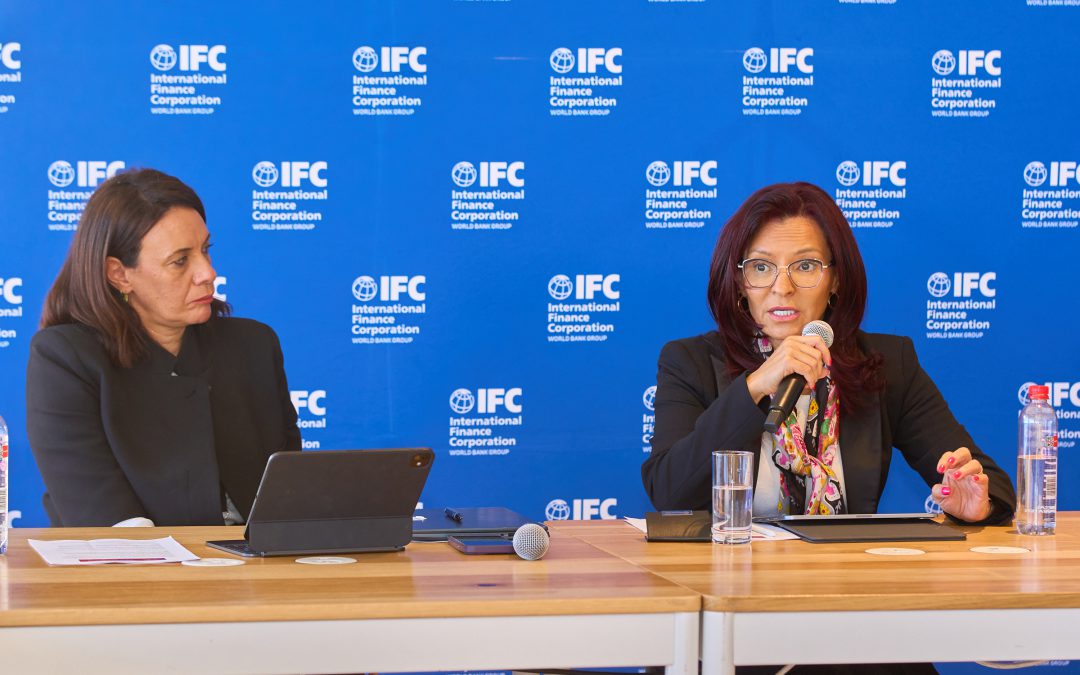
The International Finance Corporation (IFC) convened an exclusive media mixer with senior journalists and editors to explore how private capital can be mobilized and deployed at scale to create jobs and unlock sustainable growth.
The session was led by IFC’s Regional Director for Southern Africa, Cláudia Conceição , to highlight the IFC’s commitment to sustainable urban development, resilient infrastructure, and inclusive economic growth on the continent.
The media mixer was held in the ahead of the Africa CEO Forum co-hosted by IFC and Jeune Afrique Media Groupe on May 14&15 in Kigali, Rwanda where Africa’s leaders will convene to shape the continent’s economic future.
“IFC is committed to remaining a trusted partner—bringing our capital, expertise, and convening power to help Southern Africa unlock its full potential. Together, we can build cities that work for everyone, energy systems that power prosperity, and economies that create the jobs of the future,” IFC Regional Director for Southern Africa Cláudia Conceição said.
Key Themes for Media
1. Private Capital Mobilization, Skills, and Firm Capacity
Globally, capital exists at scale, but it does not reach African economies in sufficient volumes or translate reliably into jobs. Mobilizing private capital only works when firms are investable and workers have market‑relevant skills.
IFC mobilizes capital by structuring transactions that reduce risk for investors and pairing them with upstream reforms that strengthen regulatory quality and institutional capacity. The objective is to build sustainable pipelines that support growth and employment over time, rather than one‑off deals.
Citi and IFC have signed a new 1.6 billion South African rand borrowing facility that will expand IFC’s ability to provide local currency financing in South Africa. The facility has supported IFC’s anchor investment into the Cape Water outcome-based bond issued by South Africa’s FirstRand Bank – the first outcome bond issued by a commercial bank globally.
2. Health Manufacturing and the South Africa Focus
Private sector capital investment in health manufacturing can play a transformative role in shaping Africa’s economic growth and long‑term self‑reliance by building domestic production capacity for vaccines, medicines, diagnostics, and medical devices that are currently imported at scale.
Biovac, a leading South African vaccine manufacturer, has secured a major financing package from the International Finance Corporation (IFC), the EIB Group, and the European Commission to build Africa’s first end-to-end multi-vaccine manufacturing facility. The project will increase access to life-saving vaccines, strengthen the continent’s capacity to prepare for future pandemics, and advance Africa’s long-term health resilience.
The investment also aligns with AIM2030, an initiative to improve access to essential health products for millions of people in Africa over the next 5 years. Biovac is an early example of the type of market-shaping investment AIM2030 is designed to support.
https://www.ifc.org/en/pressroom/2026/ifc-eib-group-and-european-commission-back-biovac
3. Strengthening Urban Infrastructure for Inclusive Growth
Southern Africa’s economic future depends on clean, reliable, and regionally integrated energy systems and infrastructure development to support job creation.
Over the past two years, IFC has significantly deepened its partnerships with South African municipalities to support employment, build climate resilient, inclusive cities. One of our most transformative engagements has been with the City of Cape Town, where we extended a ZAR 2.8 billion senior loan—equivalent to about US$150 million—to support the city’s 10-year infrastructure investment plan.
This investment ensures that residents, especially in low‑income communities, gain access to reliable water, sanitation, electricity, and transport services. More than 70% of Cape Town’s infrastructure spending supported by this financing will benefit low‑income areas.
IFC’s Regional Director for Southern Africa
Claudia Conceicao, Cláudia Conceição is the Regional Director for Southern Africa at IFC- International Finance Corporation. She joined IFC in September 2023 and
leads the organization’s strategy and operations in 12 countries within the Southern Africa region. As a Director, Cláudia is responsible for increasing IFC’s impact and supporting development in the region’s agribusiness, infrastructure, and financial sectors, among others, as well as supporting green and climate response projects
