
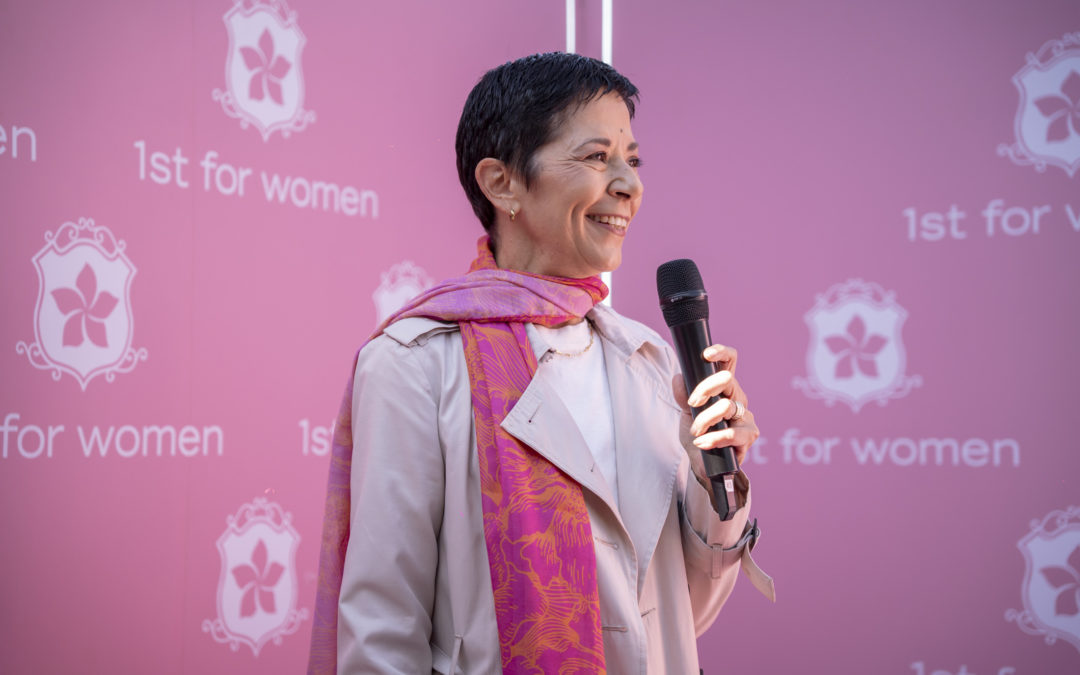
By Seugnette van Wyngaard, Executive Head at First for Women Insurance
South Africa’s SME economy is built for a business with clean edges. A defined workspace. Fixed hours. A line between work and home. For many female founders, that line does not exist. The kitchen counter becomes the office, laptop open next to the school lunchboxes. Stock gets signed for between drop off and a client call.
For a growing number of South African women, this blur is proof the business refuses to separate itself from the rest of her life. It is one of the clearest findings from First for Women’s Her & Now 2026: A World Built for Someone Else research. Self-employed women are far more likely than employed women to say they have felt dismissed by a product, service or institution: 57.1 percent, against 31.1 percent of women in full time jobs. Nearly half say it has happened more than once.
The numbers behind the blur explain why. South Africa’s female founders run spaza shops, salons, catering businesses, online stores, consultancies and creative studios, often informally and often alone. Among self-employed women, informal income is structural rather than occasional. 16.9 percent say it makes up more than half or all of their household income, against just 3.6 percent of full time employees.
Caregiving adds another layer. A founder is often the sole income earner for her household, responsible for children and ageing parents at the same time, with no deputy to step in if she is unavailable. One respondent described taking an elderly parent to hospital appointments while self-employed: any time away from the business is lost income, with no employer and no paid leave to soften it. Her risk sits with one person and one household, in a way conventional business models rarely account for.
What the research taught us about how we do business
Drawing on qualitative and quantitative research gathered from more than six thousand South African women since 2025, the report tested our assumptions against how women actually run their businesses, not to confirm what we already believed.
What the research has given us is a way of working. Listen first, then build. That discipline is why, over the past decade, First for Women Insurance is the only insurer to have claimed the Top Short-Term Insurer title three times in the ASK AFRICA Orange Index™ category rankings between 2017 and 2026/2027. First for Women Insurance’s latest 2026/2027 ASK AFRICA Orange Index™ Short-Term Insurance category win makes it a three-time winner overall.
We see that record as evidence the approach works, not as a reason to stop asking questions. It tells us that listening to women’s real lives, their finances and their caregiving loads, changes how they experience and trust a company.
That same commitment reaches beyond policies. Listening to founders taught us that a business cannot survive if the woman behind it is not safe, and for many of the women in this research, safety is not a given. Since 2005, the First for Women Foundation has raised more than R110 million from comprehensively insured premiums and supported more than 170,000 women affected by gender based violence. For a founder already carrying her household’s income alone, that support matters as much as any policy we underwrite.
The economic case
Women owned SMEs are a critical engine of employment in South Africa, often in communities where formal job creation is scarce. Every under insured female founder represents a fragile thread in her community’s economy: the employees she supports, the family she anchors.
Listening to that reality, rigorously and honestly about where we still need to improve, is how we intend to keep earning trust. This decade, and the next.
