
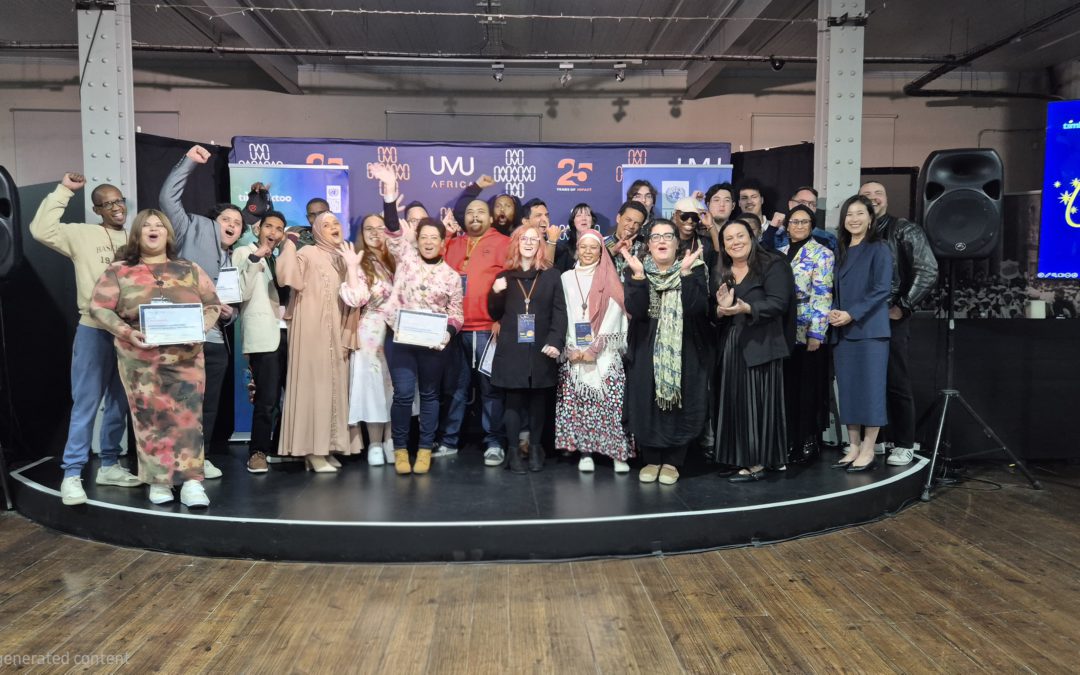
The United Nations Development Programme (UNDP) in South Africa, UVU Africa and CAPACITI, celebrated the work of 20 emerging African animators at the Independent Animators’ Showcase last Thursday evening. Held at the timbuktoo Creative Hub located in District Six’s Homecoming Centre, the event brought original films, concept art and digital portfolios before programme partners and invited guests.
The showcase marked the culmination of the four-month UNDP timbuktoo Independent Animators’ Capacity Building Programme, delivered by UVU Africa and CAPACITI, on behalf on UNDP South Africa.
The programme is UVU Africa’s mission put to work in the creative economy, not just helping animators make better films, but helping them build businesses that outlast any single project. Through screenings, participant reflections and networking, the showcase demonstrated how African storytellers are developing original work and the business skills to take it further, from a full-length project to a studio that can employ others.
Building creative businesses
Running from May to August 2026, the programme combined technical training and mentorship with practical business development. Participants developed original animated shorts, with support from mini grants, while working on areas which included intellectual property, budgeting, proposal development, audience engagement and partnership building.
The programme was structured around four pillars – Voice, Craft, Practice and Reach. This was designed to strengthen storytelling identity, technical capability, business readiness and market access.
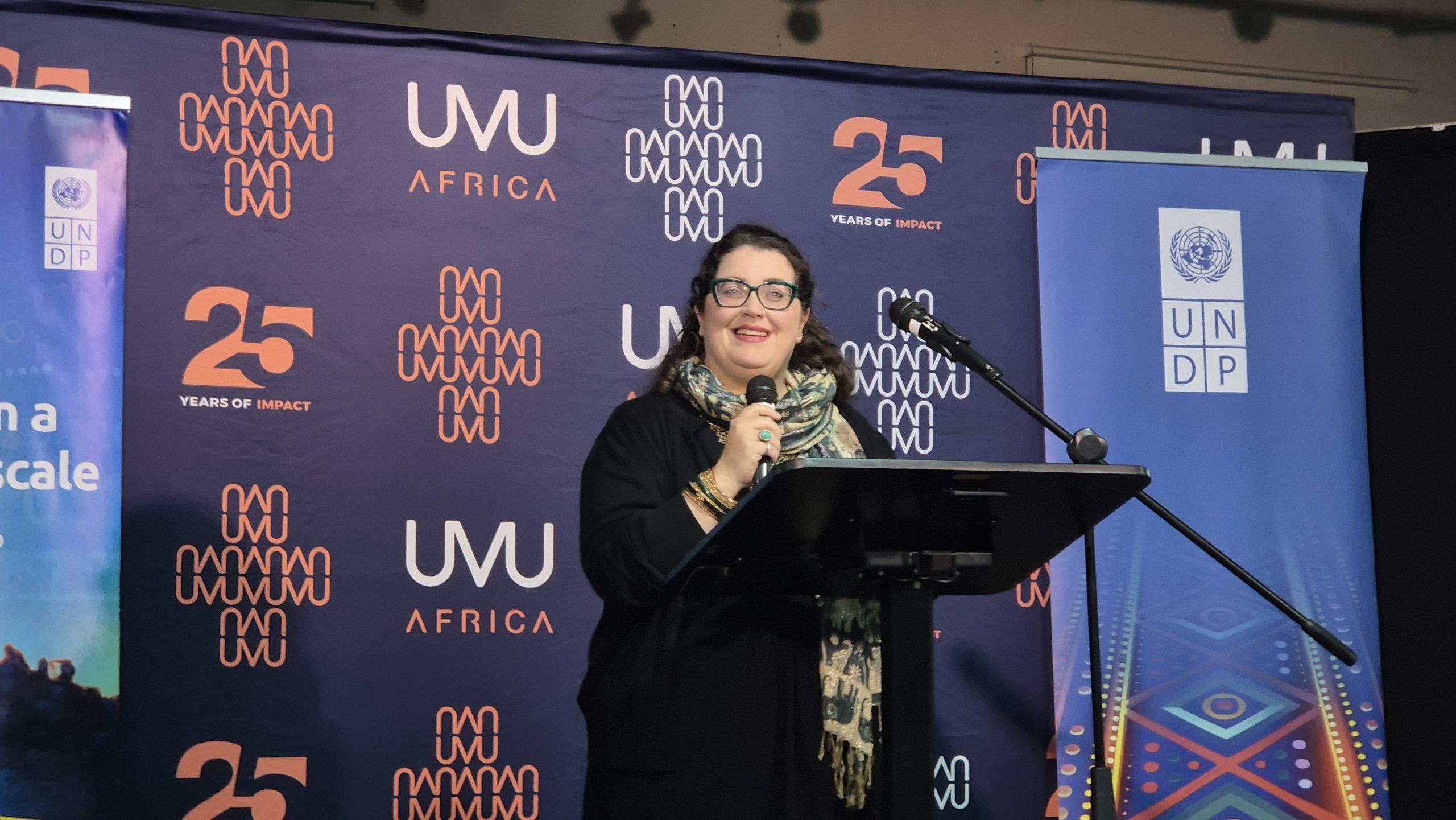
Kelly Maroon, Talent Executive at CAPACITI, the skills development arm of UVU Africa, said the programme was designed to give creative talent the confidence and commercial support to move beyond working in isolation and into a wider creative economy.
“The scarcity in Africa is not talent,” Maroon said. “The programme helps creators develop an entrepreneurial approach to access funding and protect their intellectual property”.
“We’ve got to create the scaffolding beneath the entrepreneurs that looks at policy change, international regulations around intellectual property for African creators, and how we keep the films and the stories moving globally, but the funds circulating continentally,” Maroon said.
The wider economic case is supported by the International Finance Corporation, which reports that each US$1 spent in creative industries generates US$2.50 in wealth for the economy. The estimate highlights the wider economic contribution of the creative industries.
“For us, the purpose of this programme, specifically in partnership with the UNDP, was to tell real, true African stories that came from inside of these creators,” she said.
That combination of creative ownership and commercial confidence ran through the participants’ reflections. The work on screen represented months of problem-solving, collaboration and persistence, alongside a growing understanding of what it takes to find an audience and earn a living.
Evan Jacobs, Head of Solutions Mapping at UNDP, addressed the showcase in a recorded message from New York, emphasising the growing demand for African stories and the importance of creators competing on their own terms.
“The creative economy in Africa is growing. The demand for African stories told with African sensibilities and African specificity is real, and it is increasing. You are not waiting to be a part of that; you are already a part of that,” he said.
The programme sits within UNDP’s wider timbuktoo Creatives Hub. Through the Hub, UNDP has supported 47 pan-African start-ups in 2025, 80% youth-led and 63% women-led. The animation programme contributes to this wider effort to develop African creative enterprises.
African stories on screen and beyond
The Cape Town showcase put a human face to that wider ambition. Across four screening blocks, participants presented work spanning different techniques, visual styles and personal stories. The final screening included My Paraffin TV by Althea Jarvis and The Fisherman’s Son by Ridhaa Damon.
Jarvis, a motion design and creative media animator with a background in live-action filmmaking, used stop-motion to evoke the Eastern Cape of her childhood. Working with recycled materials, including cardboard from her son’s nappy boxes, she built a tactile world for her story. Her ambition extends beyond getting her own work onto a screen.
“You have a whole crew of young people that you’re employing, and they are building puppets, or they’re building sets, or they’re animating, or they’re painting backgrounds,” she said, describing her vision of success.
For Jarvis, the programme’s business focus was her reason to join: it encouraged her to think about how artistic work could become a viable enterprise.
For Ridhaa Damon, who has had a very soft, hoarse voice since childhood, animation offers another way to express himself. His project, The Fisherman’s Son, is set at Boulders Beach in Cape Town and follows a boy confronting fear and insecurity with the help of a seal.
Damon discovered the programme while looking for work. “I got to meet incredible people, grow my skill set. I just feel like I levelled up as an artist,” he said. Alongside developing his animation, he learnt how to make connections, pitch himself to studios and seek funding.
His advice to other emerging animators was practical: “Don’t keep to yourself. Don’t just stay in your room and draw all day. Go out there. Meet people, talk to people, make connections.”
The next step is to turn that confidence and original work into further opportunities. Maroon described success as “walking out of this programme with confidence to knock on the next door, submit the next funding application, to submit their film to a film festival”.
For participant Wandile Abrahamse, the significance extended beyond individual films. Each animator had developed a proof of concept, he told the audience, but collectively the work pointed towards something larger: “The entire team output is a proof of concept that South Africa can produce its own self-sustaining animation industry and audience.”
